How to Read the News Without Burning Out in 2026
News anxiety rarely comes from knowing too much. It comes from reading without a stopping point. The feed is designed to feel unfinished, and an unfinished task follows you into the rest of the day. Breaking that loop is less about discipline than about changing the shape of how you read.
Key facts
- Doomscrolling is a loop, not a news habit: it repeats without adding information.
- Fixed reading windows reduce anxiety more than total abstinence.
- A short, edited briefing covers most of what changes your day.
- Turn off push alerts; check on your schedule instead.
- Reading to understand beats reading to react.
Why the news feels heavier than it used to
Coverage is not obviously more negative than in the past, but it is more immediate and more personal. Alerts arrive during dinner, during work, during the small gaps that used to be quiet. The result is that the world's problems are present all day, while the context needed to process them arrives rarely.
That mismatch is what produces the heavy feeling. You are receiving conclusions without the surrounding story, again and again, until the day feels like a list of disasters with no beginning or end.
Give reading a start and an end
The single most effective change is a fixed reading window. Ten to twenty minutes, once or twice a day, at a time you choose. Everything outside that window is not news time. This sounds trivial and works better than almost any other habit.
The window works because it converts an endless task into a finished one. When reading has an end, the mind stops scanning for the next headline and returns to whatever you were doing.
News anxiety rarely comes from knowing too much. It comes from reading without a stopping point.
Choose fewer sources, on purpose
Most overload comes from duplication. Five outlets covering the same event add volume, not understanding. Pick two or three sources you trust for different reasons, and let them do the filtering.
Trust here means track record, not agreement. A source that sometimes tells you things you would rather not hear is more useful than one that always confirms your mood. The point is coverage, not comfort.
Turn off the alerts
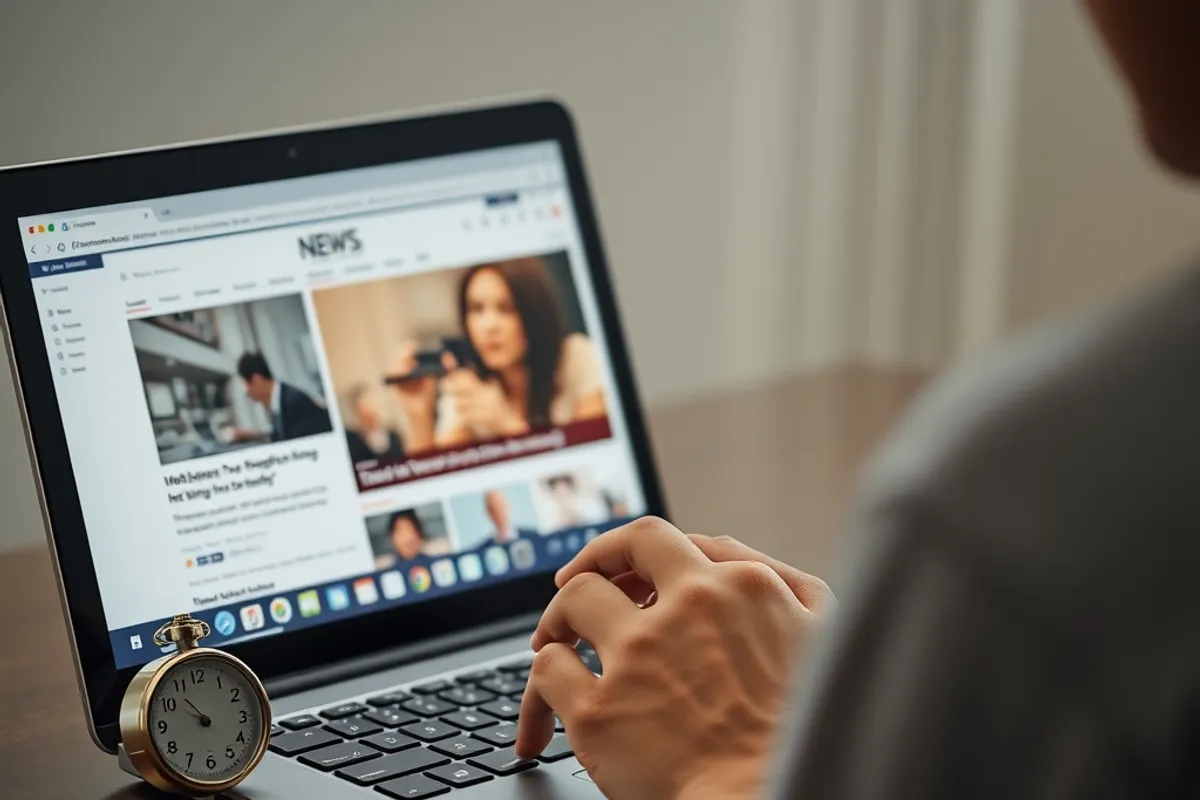
Push notifications are the main mechanism by which news enters time you did not allocate to it. Turning them off is reversible and costs almost nothing. Nothing important in the average day requires you to know within thirty seconds.
Replace alerts with a scheduled check. The difference between reading a story at 8am and at 8:02am is negligible; the difference between a calm morning and a fragmented one is not.
Read to understand, not to react
A large share of news reading is preparation for an argument. That turns every story into a weapon and every reader into a defendant. It is exhausting because it is a conflict you are rehearsing even when no conflict exists.
Try reading with a single question: what actually happened? Facts first, opinion later. You will remember more, argue less and find that most stories are simpler than the reaction to them suggests.
What to do when the world is genuinely bad
Some news deserves your attention and your concern. Burnout does not mean indifference; it means being unable to sustain care for anything. Protecting your attention is what makes long-term engagement possible.
So allow the heavy days. Read carefully, sit with them, then close the window. Care that lasts is more useful than care that burns out in a week. For the structural side of this problem, see the real cost of information overload.
Frequently asked questions
Is it irresponsible to read less news?
No. Reading a small amount carefully is more responsible than scanning constantly. Most people who cut back report better understanding and more patience, not less awareness.
How often should I check the news?
Once or twice a day in a fixed window suits most people. Breaking news can wait; ongoing stories will still be there in a few hours with better context.
What if my job requires constant news?
Separate monitoring from reading. Use alerts and tools for the narrow topics you must track, and protect one slower reading window for understanding.
Further reading from independent sources: Reuters and Associated Press.